
Have you ever opened your closing papers and gasped? Many buyers do. They save for the down payment, then face another bill. Closing costs for buyers run 2% to 5% of the price. A $500,000 home in Fairfax means $10,000 to $25,000. This guide shows what you pay and who covers what.
You will also learn ways to cut the total. Read it before you sign a contract. Most people never see these fees until late. Surprises at the table hurt, and they’re easy to avoid. SAI Mortgage helps buyers across Virginia, DC, and Maryland. We see these surprises often.
Table of Contents
ToggleWhat Fees Show Up at Closing
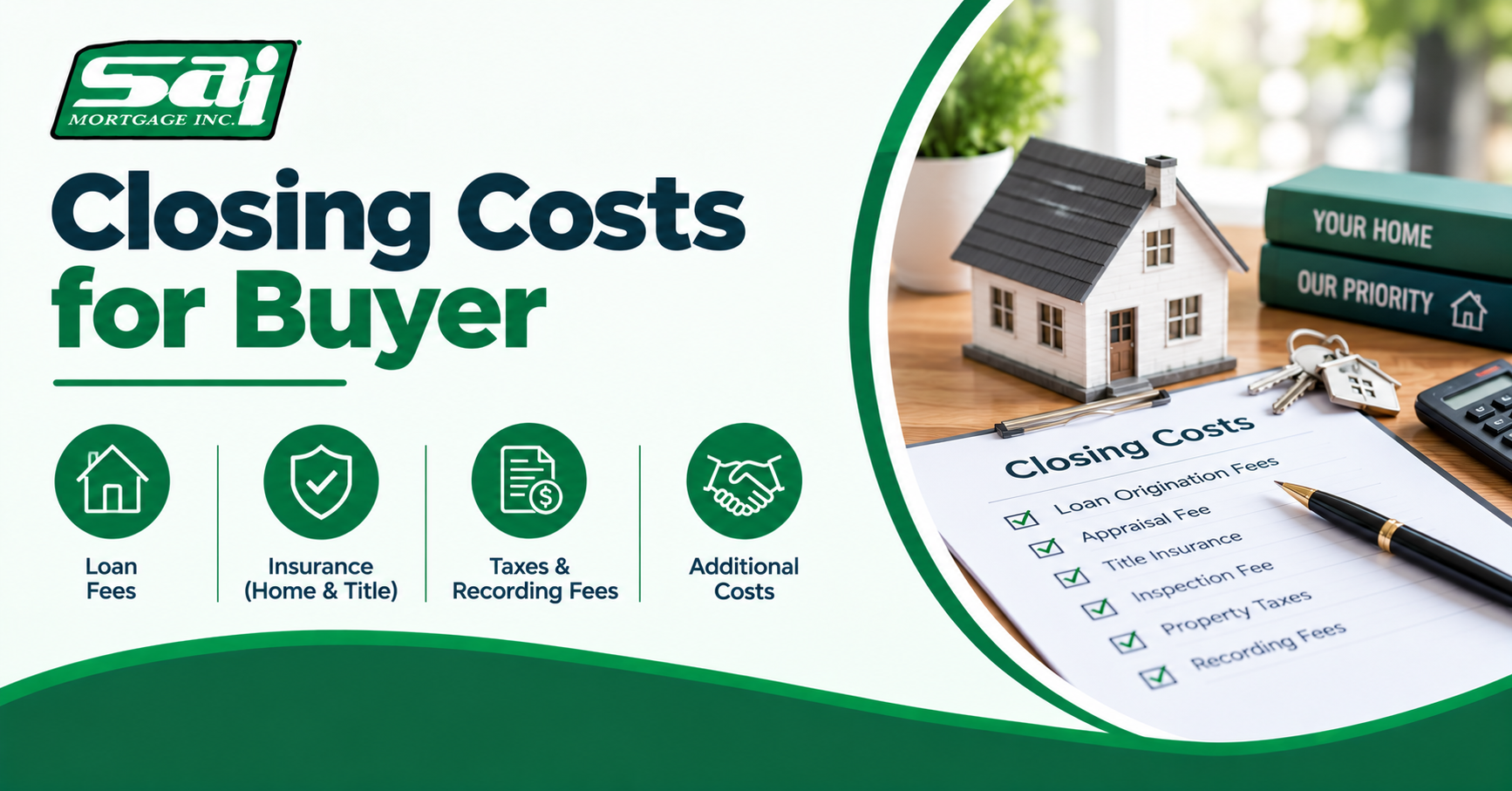
Closing cost meaning is simple. It means every fee to finish your loan and sale. Closing costs for buyers are split into five main groups. Some go to the lender. Others go to title firms, the county, and the state. What is included in closing costs? Check this list.
- Lender Fees: Lenders charge for the loan itself. Origination fees often run 0.5% to 1% of the loan. Shop lenders to lower them. Fees differ by lender.
- Title Fees: What are title fees? They pay for the deed search. Owner’s insurance often adds $500 to $1,500. Your title firm lists each charge.
- Transfer Taxes: Counties and states tax every deed transfer. Who pays transfer taxes depends on local custom. Your contract sets the final split. Ask before you sign.
- Prepaids: Closing costs and prepaids appear together on your form. They cover tax, insurance, and early interest. Lenders hold some in escrow.
- Government Fees: Recording fees put your name in county records. Taxes push closing costs in Maryland and DC above Virginia. Rates differ by county.
Who Pays What at the Table
Both sides pay at closing, but not equally. Buyers fund the loan and ownership setup. Sellers pay agent fees and some taxes. So who pays closing costs, buyer or seller? Both do, in different ways. The split works like this.
What Buyers Pay
Who usually pays closing costs on a house? You pay most. Expect loan fees, title fees, and prepaids. Maryland buyers averaged $9,218, or 2.03% of the price. Virginia buyers averaged $6,817, or 1.36%. Closing costs for buyers in DC top the nation. Local taxes push those numbers up. Your price and loan size matter too.
What Sellers Pay
Seller costs often reach 5% to 9% of price. Commissions take most of it. Typical closing costs for sellers include taxes and liens. Virginia sellers often pay the grantor tax. A seller pays closing costs for you only by agreement. A seller credit lowers your cash to close. Ask your agent about credits early.
Cash to Close
Cash to close vs. closing costs confuses many buyers. What is cash to close? It adds your down payment, fees,s and prepayments. Credits then lower the total. Your lender lists it on the Closing Disclosure. This form itemizes closing costs line by line. Compare it to your Loan Estimate. Cash to close often shifts before closing day.
Why the Bill Feels So High
Why are closing costs so high? Dozens of small fees stack up. Taxes and insurance add big chunks. Closing costs for buyers also jump in high-tax places. Five causes drive most of the jump.
- Home Price: Fees scale with the price. A $700,000 Arlington home costs more to close. Loan size drives lender fees. Bigger loans also mean bigger title costs.
- Transfer Taxes: Transfer taxes push DC to the top of the list. Local custom decides the split. Ask your agent before you sign.
- Lender Fees: Each discount point costs 1% of the loan. Origination fees add more. Skip points if you plan to move soon.
- Escrow Setup: Lenders collect tax and insurance money upfront. Ask what all is included in closing costs first. Escrow deposits look big but belong to you.
- Local Rules: Counties set their own recording fees. Closing costs in Virginia run lower than Maryland and DC. Rates shift by county.
How to Lower Your Bill
You have more control than you think. Smart moves before closing day save thousands. Closing costs for buyers drop when you shop and ask. How to save on closing costs starts with your broker. Three steps work best.
Shop Lenders and Fees
Ask three lenders for a Loan Estimate. Compare each fee line by line. A broker checks many lenders for you. Are closing costs negotiable? Yes, lender and title fees often move. Government taxes do not. Closing costs for buyers fall when lenders compete. A $500 drop on three fees saves $1,500.
Ask for Credits
A closing cost credit comes from the seller or lender. Seller credits lower your cash to close. Lender credits trade a higher rate for lower fees. Do closing costs go into the loan? Rarely, on a purchase. Refinances work differently. Run the numbers both ways. Ask your broker which credit fits you.
Time Your Closing
Close late in the month to cut prepaid interest. Interest starts the day you close. When are closing costs due? You pay at the closing table, often by wire. Wire funds a day early. Confirm wire steps by phone. Never trust emailed wire changes. Scammers target buyers near closing day.
Tax Rules and Special Cases
Are closing costs tax deductible? Mostly not. Discount points and prepaid property tax sometimes qualify. Ask a tax pro before you file. Closing costs in Washington, DC run highest in the region. DC taxes drive most of the gap.
Plan extra cash if you buy there. Appraisal and inspection fees belong in your budget too. Appraisals often cost $400 to $700. Inspections often cost $300 to $500. Builders sometimes offer credits with their own lender.
SAI Mortgage Helps You Pay Less to Close
SAI Mortgage is an independent broker in Vienna, Virginia. We shop many lenders for one file. You compare real offers, not one rule book. We show every fee in writing before you agree. Our NMLS ID is 179997. We serve buyers in Virginia, DC, and Maryland. We speak eight languages. Urdu, Punjabi, Hindi, Farsi, Arabic, Bangla, Spanish, and English.
Real people explain each step in your language. Most buyers receive pre-approval within two days. Most loans close in 30 to 45 days. We review closing costs for buyers on every file. Programs include FHA from 3.5% down. VA loans start at $0 down. USDA, jumbo, bank statement,ent and DSCR loans fit too. Clients like Daniel say we explain every step. Call (703) 980-1663 on weekdays from 9 to 7.
Conclusion
Closing day goes better when you know the numbers. Ask for a Loan Estimate early. Compare it with your Closing Disclosure. Question every fee you don’t recognize. Closing costs for buyers shrink when you push back. Pick a broker who shows every fee in writing. Bring your contract and your questions. Small questions save big money. Call SAI Mortgage at (703) 980-1663 for a clear number.
FAQs
What are closing costs for a home buyer?
Closing costs for a buyer are purchase fees due at closing. They cover lender, title, tax, and prepaid items. Most buyers pay 2% to 5% of the price. Prices vary by county.
Who pays closing costs, buyer or seller?
Buyers pay most loan, title, and prepaid fees. Sellers pay commissions and some taxes. Contracts set the final split. Closing costs for buyers drop with a seller credit. Credits need a written agreement.
Are closing costs tax deductible?
Most are not. Discount points and prepaid property tax sometimes qualify. Rules change by year and by buyer. Ask a tax pro before you file. Keep your Closing Disclosure for records.
Do closing costs go into the loan?
Rarely, on a purchase. You usually pay them in cash. Seller or lender credits lower your cash to close. Refinance loans often allow adding some costs. Ask your broker about your loan type.
When are closing costs due?
You pay at the closing table, often by wire. Your lender sends the Closing Disclosure three days early. It lists your exact cash to close. Wire funds the day before. Confirm wire steps by phone.