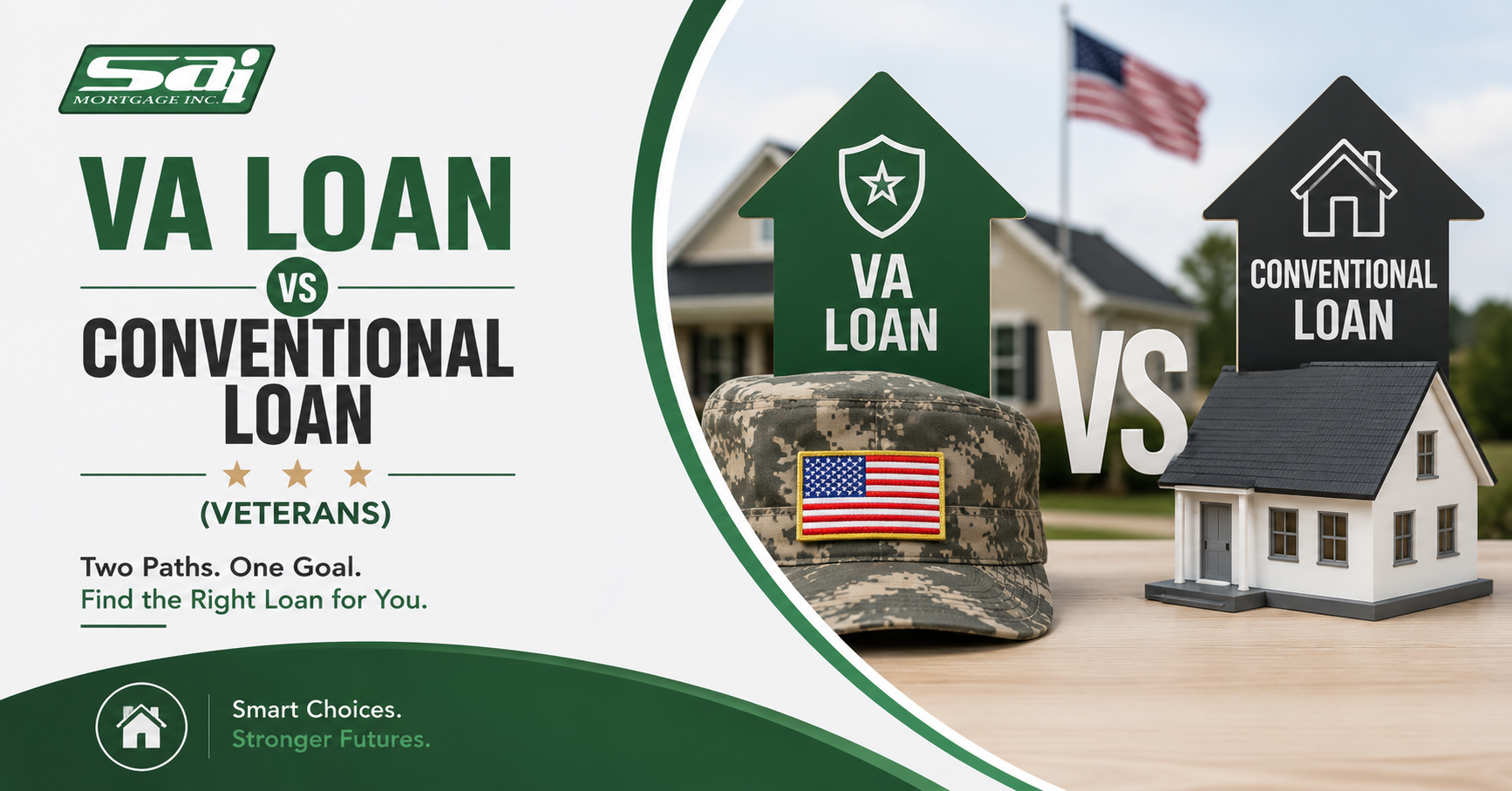
For most eligible veterans and service members, a VA loan beats a conventional loan: no down payment, no monthly mortgage insurance and usually a lower rate. A conventional loan can come out ahead when you have 20% or more to put down, want to keep your VA entitlement for a later purchase, or are buying a second home or rental. Below is a side-by-side comparison with real numbers for buyers in Virginia, Maryland and DC.
Table of Contents
ToggleImportant Factors For Comparing Mortgage Programs
You must look at upfront costs before applying for any mortgage loan. Lenders check your military papers and personal income to set terms.
- Down Payment Needs: Highlights VA loan vs conventional loan choices for veterans. Military loans allow zero cash down at closing time.
- Monthly Insurance Costs: Impacts VA loan vs conventional loan for veterans’ budgets. Standard loans charge monthly PMI fees on small down payments.
- Government Funding Fee: Applies to military-backed mortgage deals. You pay a one-time fee instead of monthly insurance.
- Credit Score Standards: Checks your past credit report history. Conventional options demand higher scores for good interest rates.
- Property Usage Limits: Limits military options to primary homes. Regular options allow investment properties and second homes.
Breakdown of VA Loan vs Conventional Loan: Veterans Features
Comparing military loans and standard mortgages shows big savings on upfront costs. Federal rules protect military buyers with low rates and easy terms.
VA loan vs conventional loan at a glance
| VA loan | Conventional loan | |
| Down payment | $0 for eligible buyers | 3% to 20% |
| Monthly mortgage insurance | None | PMI until about 20% equity |
| Upfront fee | VA funding fee (waived for many disabled veterans) | None |
| Credit score | No VA minimum; most lenders 580–620 | Usually 620+ |
| Property use | Primary residence only | Primary, second home or rental |
| Appraisal | VA appraisal with minimum property requirements | Standard appraisal |
Initial Cash Required
Military home loans do not require cash down payments for most buyers. Regular mortgages ask for three to twenty percent cash upfront. Saving less cash lets you buy a house much faster.
Ongoing Fee Structure
Standard loans charge monthly PMI until you build twenty percent equity. Military loans drop monthly insurance entirely to lower your monthly bill. This saves buyers hundreds of dollars every single month.
Bank Credit Approval
Regular banks enforce higher credit score cutoffs for conventional mortgage products. Government-backed military loans allow lower credit scores without penalizing rates. This difference helps more buyers get approved for loans.
Down Payment Rules and Insurance Requirements
Comparing mortgage requirements helps military members pick smart financial paths. Your down payment size changes your overall home buying budget.
- Zero Cash Down: Benefits buyers using a VA loan vs. a conventional loan for seller strategies. You keep savings in your bank account safely.
- PMI Insurance Fees: Adds extra monthly costs to standard mortgages. Paying PMI increases your house payment every month.
- One-Time Funding Fee: Covers government backing on military home deals. Disabled veterans often skip this fee completely.
- Interest Rate Levels: Stays lower on government-backed military loans. Lower rates save big money over thirty years.
- Refinance Options: Offers easy, streamlined paths to lower interest rates later. Military loans simplify paperwork checks for refinancing.
Key Differences Between Loan Types
Understanding overall costs reveals the true value of military benefits. Higher interest rates on regular loans increase long-term house costs.
Lower Interest Rates
Government backing lowers lender risk on military mortgage applications. Banks offer lower interest rates to military buyers as a result. Lower rates keep your total interest payments much lower.
Property Safety Standards
Military appraisers inspect homes for specific safety and health items. Properties must pass strict tests before loan approval happens. Regular loans use flexible appraisal rules for home conditions.
Buying Second Properties
Regular loans work for vacation homes or rental investment units. Military loans require you to live in the home yourself. Understanding the Difference between a VA loan and a conventional loan guides your choice.
Summary of VA Loan vs Conventional Loan Features
For eligible service members and veterans, a VA loan is usually the better financial choice because it requires no down payment and no monthly mortgage insurance, while a conventional loan is best for buyers who do not have military eligibility or those who can put 20% down.
Key Differences
- Down Payment: VA loans may be financed at 100% of the purchase price with no money down for eligible buyers. We covered them in detail, but a down payment of 3% to 20% is required for conventional loans.
- No Mortgage Insurance: VA loans are never subject to private mortgage insurance (PMI), which is a cost that many buyers, particularly those with FHA loans, must pay. For example, with a conventional loan, PMI is paid monthly if you put less than twenty percent down.
- Interest Rates: Barring a couple of exceptions, and because VA Loans are backed by the government, they generally have interest rates that average25% to 50% lower than conventional loan rates.
- Costs: VA loans: A one-off VA Funding Fee (this varies according to your down payment and the time you have had your mortgage) of 0.5%- 3.3%; disabled veterans are often exempt from this. Conventional loans have no funding fee, but instead incur ongoing PMI.
- Property guidelines: The house where you want to live should be your principal home and meet strict safety and habitability rules (Minimum Property Requirements) for the duration of the loan. Conventional loans can be used for a vacation home or an investment property, and conventional loans also have more lenient appraisal criteria.
Which One Should You Choose?
- Choose a VA Loan if: You served in the military, want to buy a primary home, and want to avoid a large down payment and monthly mortgage insurance.
- Choose a Conventional Loan if: You are not military-eligible, want to buy an investment or second property, or have a 20% down payment ready to avoid extra fees.
Can a Veteran Use a Conventional Loan Instead?
Yes. Being eligible for VA financing does not lock you into it. Veterans pick conventional loans when they have 20% down and want to skip the funding fee, when their VA entitlement is tied up in another home, or when they are buying a vacation home or a rental.
Military banks and credit unions offer both loan types, but they only show you their own pricing. A broker can put a VA quote and a conventional quote from several lenders side by side on the same day. Not sure you qualify? Check VA home loan eligibility and how BAH counts as income
Real World Cost Analysis for Buyers
Choosing the wrong mortgage can cost you thousands of extra dollars. Standard loans charge monthly PMI fees that build zero home equity. Military loans use a one-time fee that rolls into the loan balance. Whether a VA loan is better than a conventional loan depends on your cash reserves. Buyers with twenty percent cash might prefer regular loans to avoid funding fees. Most military buyers save more money using government-backed benefits.
Veterans buying near Marine Corps Base Quantico in Prince William County often compare both loan types against local home prices.
SAI Mortgage, Inc. Can Help You With Your Home Loan Choices
SAI Mortgage, Inc. helps you get a home loan in Virginia, Washington, DC, and Maryland. We are friendly business people committed to offering our customers home loan products using modern tools. Customer satisfaction is our main reward every single day. We help you find the right loan product for your needs, including a home mortgage loan in Virginia. We understand that every borrower is different. We offer many loan options to meet your personal goals. We provide guidance on home mortgage rates and Virginia home mortgage loan rates to help you make sound choices. We make securing a mortgage simple and straightforward for every homebuyer. We handle calls in Urdu, Punjabi, English, Farsi, Arabic, Bangla, and Spanish. Call us at (703) 752-1805 to start your application today.
Conclusion
Comparing military home loans against regular options reveals clear financial perks. Skip high down payments and monthly insurance by using your earned benefits. Keep your savings in the bank for home updates and life events. Work with expert loan officers who understand government backing rules. Contact a local mortgage specialist to review your government-backed loans today.
Frequently Asked Questions
Is a VA loan better than a conventional loan?
For most eligible buyers, yes: $0 down, no PMI, and usually lower rates. A conventional loan can be cheaper if you put 20% down and would otherwise pay a large funding fee.
What are the disadvantages of a VA loan?
The funding fee, the primary-residence rule and the VA appraisal, which checks the home against minimum property requirements. Some sellers also worry about VA repair requests, so a strong pre-approval helps.
Can I switch from a VA loan to a conventional loan later?
Yes. Once you have enough equity, you can refinance into a conventional loan, which frees your VA entitlement for another purchase.
Do VA loans have higher closing costs than conventional loans?
Not usually. The VA limits some fees lenders can charge. The main extra cost is the funding fee, which can be rolled into the loan and is waived for many veterans with a service-connected disability.