
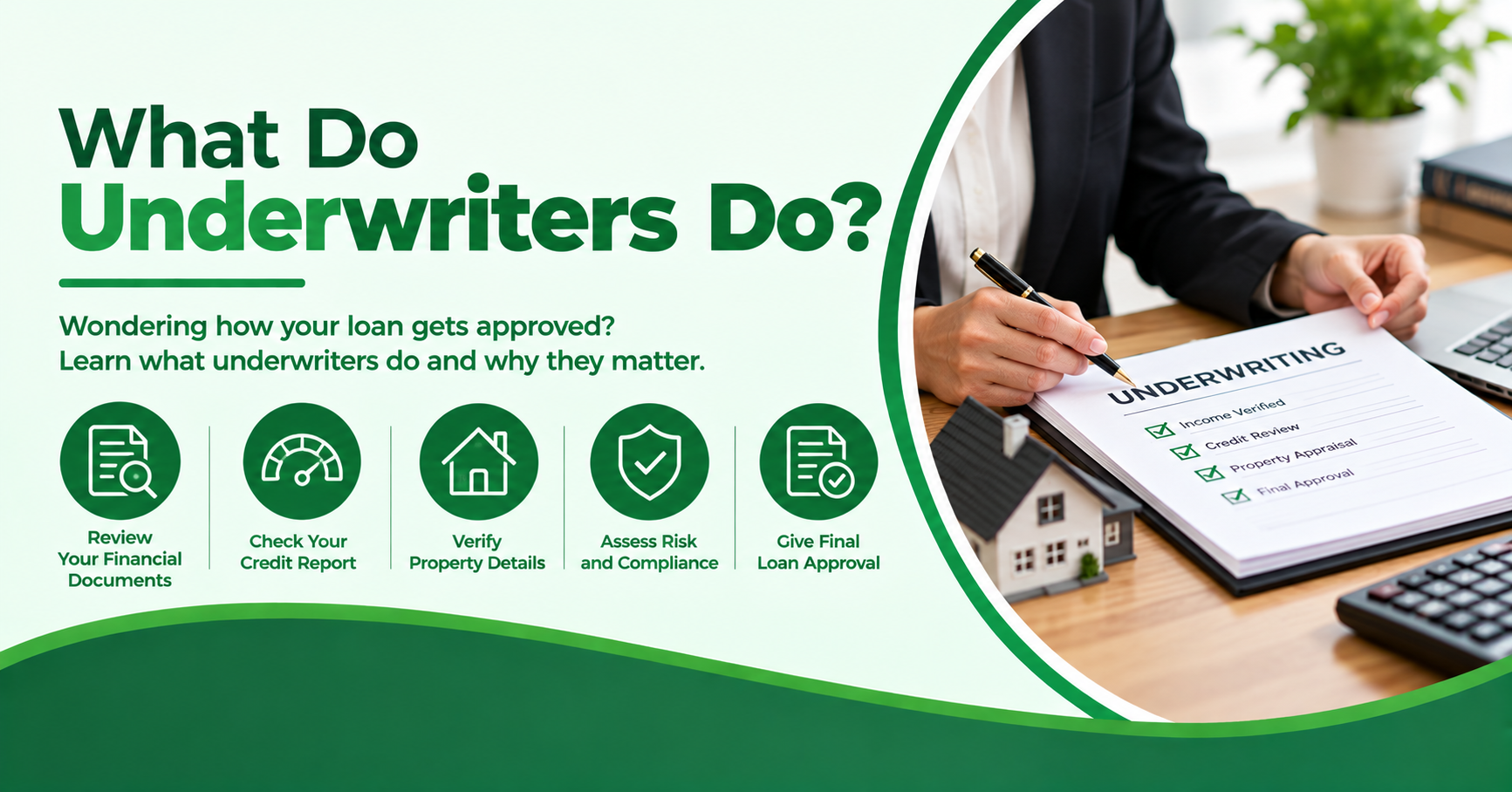
Do you dread hearing your loan is in underwriting? Most buyers do. Your file sits on a stranger’s desk for days. So what do underwriters do all this time? They check your pay, your debts, and the home. Then they decide if the loan is safe. Small gaps stall many deals here. One missing pay stub costs you a week. Don’t worry. It’s less scary than it sounds.
This guide explains each step in plain words. You’ll see the timeline and the common conditions. You’ll also learn which letters lenders ask for. You’ll leave knowing what to send and when.
Table of Contents
ToggleLoan Officer Vs Underwriter: Who Does What?
Your loan officer guides you. Your mortgage loan underwriter judges the file. The officer collects papers and answers calls. The underwriter rarely speaks to you. So send every question to your officer. Should you be worried about underwriting? Not if your papers are clean. What do underwriters do when papers are messy? They ask for more. Good officers pre-check your file. Pre-checks cut surprise conditions.
What A Mortgage Underwriter Checks In Your File
A mortgage underwriter reads every page you send. So what do underwriters do first? They hunt for risk, not mistakes. Think of it as a safety check for the lender. These five items get the most attention. Gather them before applying, and you’ll move faster.
- Credit History: Your score and late payments come first. Conventional loans often want 620 or more. FHA loans start near 580. A recent foreclosure usually ends the file. Each loan type follows its own mortgage underwriting guidelines.
- Income and Job: Plan on two years of W-2s and two pay stubs. Lenders also run a verbal verification of employment. Most call it a VVOE. It happens right before closing. It’s a quick call to your boss.
- Debt Load: Underwriters divide your monthly debts by your monthly income. This gives your debt-to-income ratio. Many lenders like 36 percent or lower. Some loans allow more, but rates often rise.
- Down Payment Funds: Every large deposit gets traced. Send two months of bank statements. Gifts need a signed gift letter. A verification of funds letter from your bank also helps.
- Home Value: The lender orders an appraisal. It proves the home is worth the loan. A $400,000 loan on a $500,000 home is 80% loan-to-value. Lower is safer for the lender.
How Long Does Mortgage Underwriting Take?
Waiting feels slow. Most buyers fear this part the most. So what do underwriters do for all those days? They read, check, and call. How long does mortgage underwriting take? It depends on your file. Clean files move fast. Messy ones drag. The numbers below show the range.
The Normal Timeline
So how long does an underwriter take? Most need two to seven days. Add a day or two for the final review. Computers decide in minutes, but a person still checks. The average file takes about 50 days to close. Don’t plan your move around the fastest case.
What Slows The Process Down
Missing papers cause most delays. So do unexplained income gaps. Title problems and slow appraisals add days too. Each new request adds more waiting. Answer within a day. What happens when your credit score drops during underwriting? The lender pulls your credit again before closing. A drop changes your rate or kills the loan. Skip new credit cards until closing. A new card drops your score fast.
Timing After Conditional Approval
How long after conditional approval is final approval? It depends on you. Send every condition fast. The underwriter then signs off, often within days. How long after underwriting is closing? Closing follows once you’re cleared to close. Your lender sets the date, so ask early. Keep your phone on during this stretch. Lenders call with last-minute asks.
What Does Conditionally Approved Mean?
So what do underwriters do at the finish line? They pick one of five answers. Each means something different for you. Most files land on conditional approval first. It’s normal. Knowing all five stops needless panic. Read each one before your lender calls.
- Approved: The lender needs nothing more. You schedule closing. This happens rarely on the first pass. Most files get conditions first, so don’t count on it. Treat a clean approval as a bonus.
- Conditionally Approved: The underwriter likes your file but wants more proof. Conditional approval is a good sign. You’re close. Expect a short list, like pay stubs or a letter. Clear them fast, and you stay on schedule.
- Suspended: Missing papers stall the file. Send them fast. The review restarts once everything arrives. Ask your officer for the full list. Nothing should slip. Check your email twice a day.
- Denied: The lender says no. If credit played a role, it must tell you why. A loan declined after conditional approval is rare. Job loss, new debt,t or a dropped score cause it. Ask about FHA loans, which have lower entry barriers.
- Clear to Close: Every condition is done. Many lenders also issue a commitment letter for your mortgage. It’s their written promise to fund your loan. Then you sign your closing papers.
Letters And Forms Underwriters Ask For
Conditions often arrive as short requests. Most ask for a letter or a form. None is hard. Each has a simple format. Underwriters match each paper to your file. So send clean, short answers. Long stories confuse the file. Your loan officer reviews each one first. Fast, clear replies protect your closing date.
Letter Of Explanation Format
A letter of explanation for a mortgage should stay short. Use a plain letter of explanation format. Add the date, your name, and your loan number. State the issue in two or three sentences. Sign it. Ask your lender for a sample letter. Common topics include credit inquiries and late payments. Address gaps and derogatory credit come up too.
Verification Of Funds And Job Letters
A verification of funds letter comes from your bank. It confirms the balance and the account holder. Many lenders also want a FNMA VOE form. Your HR team fills it out. Send both within a day. Slow replies cost you days. Ask your bank how long the letter takes. Some branches need a few days.
Manual Underwriting For Thin Files
Manual underwriting means a person reviews your whole file. It fits thin credit, like a no-score loan. Expect extra paperwork and rent history. It often takes two to five days. Self-employed buyers see it often. Ask about our self-employed and bank statement loans. Manual underwriting vs automated mortgage approval: your file decides. Clean files often get automated underwriting approval instead.
Sai Mortgage Helps You Clear Underwriting
Sai Mortgage is an independent broker. We serve Virginia, Washington, D.C., and Maryland. We shop many lenders for each file. If one underwriter says no, we try another. Our loans include VA, jumbo, refinance, and condo. Bank statement loans are on our menu too. Our team holds NMLS ID 179997.
We take calls in seven languages. Urdu, Punjabi, English, Farsi, Arabic, Bangla, and Spanish. Most buyers get pre-approved within two days. Starting takes no credit check. We read your file like an underwriter would. We flag gaps early. We explain each condition in plain words. Buying your first home? See our first-time home buyer loans. Still wondering what underwriters do with your file? Call us at (703) 980-1663. We’re open Monday to Friday, 9 AM to 7 PM.
Conclusion
Underwriting feels scary until you see inside it. Now you have. So what do underwriters do? They protect the lender and you. Send clean papers and answer fast. Skip new debt and big purchases until closing. Most files clear when you do. Got a tough file? Call Sai Mortgage at (703) 980-1663. We’ll tell you where you stand, with no pressure.
Frequently Asked Questions:
What do underwriters do for a home loan?
What do underwriters do? They review your credit, income, debts, and savings. They also check the home’s value. Then they approve, suspend, or deny the loan. Their job is to judge risk for the lender.
How long does underwriting take for a mortgage?
Most lenders need two to seven days. Final review adds a day or two. Missing papers stretch it to a few weeks. Clean files finish faster. Manual underwriting often takes two to five days.
What does conditionally approved mean?
It means the underwriter wants more proof. You get a list, like pay stubs or a letter. Clear every item, and closing gets closer. Conditional approval is a good sign.
Do buyers get denied after pre-approval?
Yes, it happens. Pre-approval is not final approval. Job loss and new debt cause most denials. A lower credit score does it too. The chances stay low if your finances hold steady.
How many years working at the same company before a mortgage?
Most lenders want two years of steady work history. You don’t need two years at one company. Job changes in the same field usually pass. Explain any gaps with a letter.