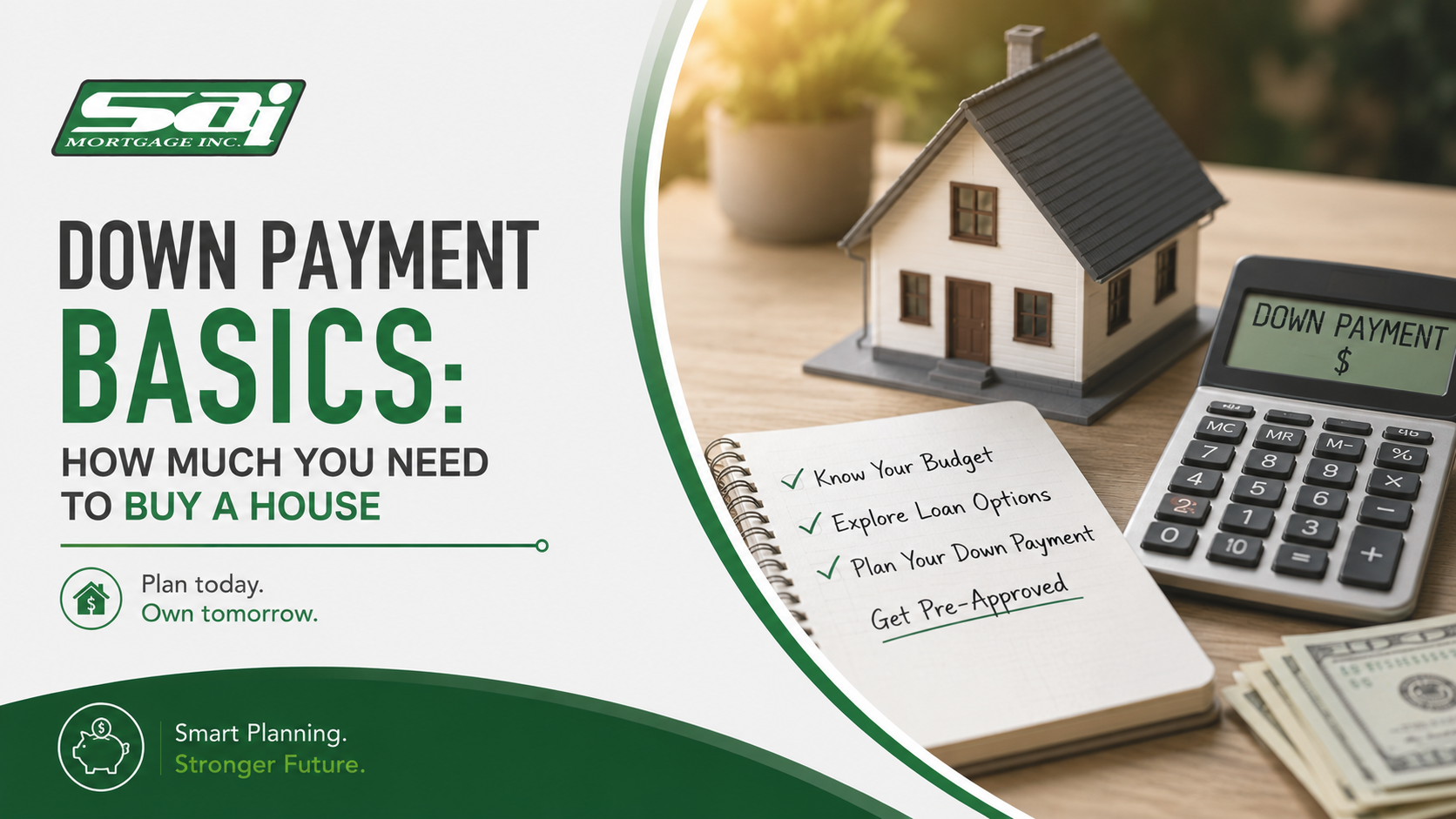
Many buyers believe you must save twenty percent cash before buying a home. That rule is old and wrong. You do not need a 20% down payment to buy a house; minimums range from 0% to 3.5% depending on the loan type, though putting down less means paying extra for mortgage insurance.
Buyers pay different amounts based on credit score, savings and chosen loan programs. A large upfront payment lowers your monthly check. A small payment gets you into a home years faster. Understanding how much down payment I need for a house helps you plan your money safely without guesswork.
Table of Contents
ToggleHow Upfront Payments Work Across Different Prices
The cash you need changes directly with the price tag of the home you buy. A $300,000 house needs $9,000 at 3% down, $10,500 at 3.5% down or $60,000 at 20% down. A $500,000 house requires $15,000 at 3% down, $17,500 at 3.5% down, or $100,000 for a full 20% payment.
Higher-priced homes require bigger checks at closing time from every buyer. But low cash choices keep home ownership within reach for hard-working families today. Learn more about basic payment rules on Wikipedia to see how house deposits work.
Minimum Down Payments for Buying a House
Your upfront cash requirement depends on the loan program you pick with your lender. Different programs offer unique paths for first-time buyers and military families alike. Here are the common loan types and minimum cash needs required for house approval:
- Conventional Loans: Require as low as 3% to 5% cash down for qualified home buyers with good credit scores. Putting down twenty percent lets you avoid paying extra monthly private mortgage insurance fees over time.
- FHA Loans: Allow a low 3.5% down payment if your credit score hits 580 or higher. Buyers with credit scores between 500 and 579 can still qualify by putting down ten percent cash upfront.
- VA Loans: Offer zero percent down payment options for eligible military members, active veterans and surviving spouses. These special government-backed home loans let qualified buyers purchase real estate without saving any upfront house cash.
- USDA Loans: Require zero percent down payment for qualified buyers purchasing homes in eligible rural and suburban areas. These programs assist low-income families by removing the need for a large upfront cash deposit at closing.
Basic Loan Factors That Change Your Cash Needs
Lenders look at your whole financial file to decide your required upfront payment size.
- Credit Score Limits: Higher credit scores unlock lower cash minimums on standard loans, while lower scores demand higher upfront cash choices from lenders.
- Home Purchase Price: Higher price tags require larger cash totals upfront even if your target down payment percentage stays small and steady.
- Property Location Rules: Rural homes qualify for zero cash programs, while city condos may require stricter guidelines from local mortgage lenders.
- Occupancy Status Type: Living in the property requires less cash than purchasing an investment property loan for rental income purposes.
- Mortgage Insurance Rules: Putting down less than twenty percent cash triggers extra monthly private mortgage insurance fees on top of your payment.
Trade-offs Between Large and Small Down Payments
Choosing your cash amount shapes your personal budget for many years ahead. You must balance fast home entry against lower monthly bills over time.
Lower Monthly Costs
Putting down more cash reduces your main borrowed loan balance right from the start. A smaller balance means lower principal and fee charges on every check. You save thousands of dollars in total interest costs across thirty years.
Avoiding Extra Monthly Fees
Putting twenty percent cash down skips mortgage insurance costs completely on standard home loans. That extra fee protects the bank if a buyer stops paying. Removing that fee keeps more money in your personal wallet each month.
Speed to Homeownership
Selecting a smaller cash option helps you buy a house much faster without waiting. You do not spend years saving money while local property prices keep going up. You start building personal home equity right away after moving in.
Practical Ways to Save Your House Cash Fast
Saving thousands of dollars feels hard, but simple habits turn small daily steps into a real house check.
- Automate Savings: You should put money in the savings account every paycheck day. Saving for the house should be like a bill you can’t spend. This way, you won’t lose money from your other funds on extra spending.
- Eliminate Expenses: Cancel subscriptions or stop using money to buy your meals outside. All these savings should be put in a high-yield account. You end up with so much more cash for the savings than you thought.
- Work Bonuses: Set aside tax refunds, work bonuses, and gift cash in the house savings. This money adds to the house savings with no impact on the spending ability of the family.
- Monitor Spending: Focus on monthly reviews of your bank statements so you can see spending habits that are a waste of money and so you can fix them quickly. Spotting small money leaks lets you move extra cash straight toward your future home deposit fund.
- Keep Funds Separate: Open a dedicated bank account just for your house deposit money. Keeping home cash away from daily checking accounts stops you from spending your savings on sudden impulse purchases.
How SAI Mortgage Can Help You Buy a Home
Finding the right loan can feel hard when you do it alone. SAI Mortgage makes home loans simple for buyers in Virginia, Maryland and Washington, DC. We help you check Virginia home mortgage loan rates so you make safe financial choices. Our team works hard to get you low home mortgage rates for your budget. We offer custom loan options that fit your exact savings plans.
Our staff speaks many languages, including English, Urdu, Panjabi, Farsi, Arabic, Bangla and Spanish. We use fast automated tools to speed up loan approvals and cut down waiting time. You get clear help through every single step of your home buying plan. Call SAI Mortgage today to talk with a friendly loan expert about your house plans.
Conclusion
Saving for a house takes careful planning, but low down payment options make buying easy. Check your credit score, set a simple savings goal and compare local loan programs. Knowing how much down payment I need for a house gives you power to plan clearly. Contact a trusted mortgage broker today to review your best loan choices.
Frequently Asked Questions
What is the meaning of down payment?
A down payment is the upfront cash a buyer pays toward the purchase price of a home, with the lender covering the rest through a mortgage. The bigger your down payment, the smaller your loan balance and monthly payment.
What is the down payment for a $200,000 house?
A 3% conventional down payment on a $200,000 house comes to $6,000, while a 3.5% FHA down payment comes to $7,000. Putting down the full 20% would require $40,000 upfront, which also removes the need for mortgage insurance.
How much of a down payment do I need for a $300,000 house?
At 3% down, you would need $9,000 for a $300,000 house, and at 3.5% down, you would need $10,500. A full 20% down payment would come to $60,000, helping you skip monthly private mortgage insurance costs.
How does a down payment work?
When you make an offer on a home, you pay a percentage of the purchase price upfront in cash at closing. The lender then finances the remaining balance through your mortgage, which you repay in monthly installments over the loan term.
Is a smaller down payment always a worse choice?
Not necessarily. A smaller down payment gets you into a home faster and keeps more cash in savings, though it usually means paying mortgage insurance and a higher monthly bill. A larger down payment lowers your monthly costs and total interest but takes longer to save.